
Preparing your timber floors for a New Zealand spring
After a wet, heated winter, spring asks something different of a timber floor. Here’s what to check and how to get ahead of it.
The heater finally goes off, the ranch slider gets opened more than it’s shut, and the lounge starts filling up with more than just evening telly. Spring changes how a home is used, and your timber floor feels those changes too.
If your floors made it through winter without much thought, spring is the time to check they’re not just still there, but still in good shape.
Here’s what can cause the most wear this time of year, what to look for room by room, and the simple habits that will help keep your floors looking their best long after spring is over.
Why spring asks something different of a timber floor
Timber is a natural material, and it behaves like one, absorbing and releasing moisture as the air around it changes. As a result, timber flooring can expand and contract slightly over time. It’s a natural characteristic rather than a fault, and it applies to both solid and engineered timber flooring. It’s well documented too, by bodies like the Australasian Timber Flooring Association, the industry group covering both Australia and New Zealand. This is especially true of solid timber flooring, which moves a little more with the seasons than engineered options do.
Heating can reduce indoor humidity during winter, causing boards to contract slightly and small gaps to appear. As temperatures and humidity change through spring, timber may take up moisture again and some seasonal gaps may reduce. Larger, uneven or persistent gaps should be checked by a flooring specialist, particularly if they are accompanied by lifting, softness or other visible changes.
Newly installed timber floors may also adjust as they respond to the conditions within the home. Some movement can be normal, but the expected level will depend on the timber, installation method and indoor environment. If you are unsure whether a change is part of normal seasonal movement, it is best to have the floor assessed.
Check for winter damage before anything else

Before any spring clean, it’s worth walking through the house, taking a closer look at the floor, rather than giving it a quick glance. Winter puts real wear on timber, and the areas that took the most traffic are usually the ones to check first.
- Gaps between boards in the hallway or lounge that opened up over a dry winter
- Scuffing and dulling near the front door, where wet boots and school bags land every day
- Lifting or movement near ranch sliders and bifold doors, particularly where moisture may have reached the floor.
- Any patch that feels slightly soft or springy underfoot compared with the rest of the room.
Signs it's just cosmetic
Light scuffing, a duller patch along a high-traffic strip, and small surface marks are normal wear, not damage. A proper clean, and in some cases a maintenance coat, usually brings this back.
Signs to call in a professional
Boards that have visibly lifted, split or cracked, a soft spot underfoot, or a colour change that won’t clean off are worth a proper look. Better before summer adds another season of heat and movement on top. Identifying the cause early may help prevent further deterioration and a more involved repair.
Get ahead of spring humidity
The same hygroscopic behaviour that closes up winter gaps can work against a floor if humidity swings too far, too fast. Most flooring manufacturers recommend keeping indoor humidity in a moderate, consistent range, generally somewhere between 40 and 60 percent. The goal is avoiding a swing from a dry, heated winter straight into a damp spring.
A few habits help. Ventilate rooms regularly. Run the extractor fan in the bathroom and laundry so moisture doesn’t sit and use a dehumidifier in any room that stays noticeably damp through spring. None of this is complicated. It’s about avoiding sudden swings, not chasing an exact number.
Protect the floor as the sun comes back
Daylight saving means more sun in the house, and a lower spring sun angle often means it reaches further across a room than it does in summer. Direct sun fades timber unevenly over time, so a rug or mat that’s stayed in the same spot all winter can leave a visible line once it’s moved.
Rotate rugs and mats every few weeks through spring so any fading happens evenly. Consider closing blinds or curtains during the part of the day when the sun sits lowest and hits the floor hardest. It’s a small habit that protects the finish without shutting the light out altogether, and it matters most in a lounge or living area with large windows or ranch sliders facing the afternoon sun.
Mud, pollen and muddy paws at the door
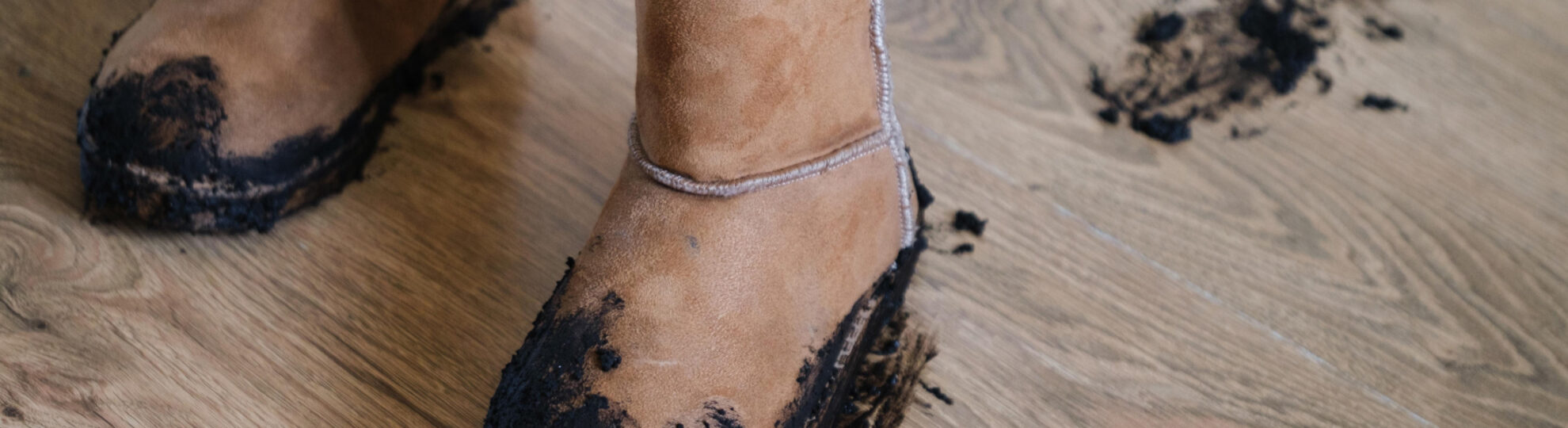
More time outdoors means more dirt, grit and moisture being tracked inside, especially with kids and pets coming and going.
Place a mat on both sides of each entryway to catch dirt before it reaches your floors, and sweep or vacuum regularly to prevent grit from causing unnecessary wear. A deeper clean throughout spring will also help keep your floors looking their best.
Don’t forget your pets’ nails, too. Keeping them trimmed can help reduce wear on timber finishes.
Small, regular habits can make a big difference, helping your floors stay looking their best through every season.
A quick spring floor care checklist
- Check hallways, living areas and main entrances for gaps, dull patches or movement.
- Wipe up moisture promptly and avoid leaving damp mats on timber.
- Ventilate the home and address persistent condensation or dampness.
- Rotate rugs periodically to reduce sharply defined colour differences.
- Use mats at entrances to catch dirt, grit and moisture.
- Keep pets’ nails trimmed to reduce scratching.
- Use cleaning products recommended for your particular floor and finish.
- Ask a flooring specialist to assess any problem areas or unexplained discolouration.
When it's more than a clean
Most of the time, a mop and a bit of care is genuinely all a floor needs. Other times, especially if it’s been a few years since the last proper service, what it actually needs is more. This is where a scrub clean and a fresh maintenance coat comes into play. Using the recommended cleaning and maintenance products for your floor matters too. The wrong cleaner can do more harm than the mud it’s meant to remove. Our wooden floor cleaning range is worth a look before reaching for whatever’s under the sink.
If a walk through the house has turned up something more than light wear, our floor care and maintenance team can take a proper look. We’ll say honestly whether it’s a clean, a coat, or something bigger.
Get in touch and we’ll talk you through it, in plain terms, before you spend money on the wrong fix.
A few questions that might help:
Why do my timber floors have gaps after winter? Dry heating through winter draws moisture out of the boards, which causes them to shrink slightly and can leave small gaps. This is normal, small seasonal gaps may reduce as indoor conditions change.
What humidity is best for timber floors in a New Zealand home? Most manufacturers recommend a moderate, consistent range, generally around 40 to 60 percent. What matters more than hitting and maintaining an exact number is avoiding sudden swings from one extreme to another.
Should I get my timber floors professionally cleaned in spring? If a floor is genuinely dirty, a good clean (with some good old fashioned elbow grease), is enough. If the floor remains dull after being cleaned with an appropriate product, ask a flooring specialist whether it needs a deeper clean, maintenance coat or another form of treatment.
Do oiled and coated timber floors need different spring care? Yes. Oiled, polyurethaned and other finished timber floors can require different products and maintenance methods. Check the manufacturer’s instructions or ask a flooring specialist before applying a new cleaner, oil or coating.
What Our Team Recommends
"The question we get most often is whether timber flooring can handle a New Zealand winter. The honest answer is yes, with the right product and the right finish for your space. We take time to understand how each customer uses their home before recommending anything. A family with underfloor heating and young children has different needs to someone fitting out a rental or renovating a period home. Getting that match right at the start saves a lot of problems later."
The Just Hardwood Floors Team Tweet
Bottom line
Spring doesn’t ask much of a timber floor, but it does ask something different from winter. A quick check for gaps and scuffing, a steadier approach to indoor humidity, and a mat at the front door will cover most of it. If something looks like more than normal wear, it’s worth a proper look rather than waiting for summer to make the decision instead.
Not sure whether a floor needs a clean or something more? Talk to our team and we’ll give you a straight answer.
Key Takeaways
- Small gaps that open up over winter usually close back up as spring humidity returns.
- Keep indoor humidity moderate and consistent, roughly 40 to 60 percent, rather than swinging between extremes.
- Rotate rugs and mats through spring so sun exposure fades the floor evenly.
- Entryways take the most punishment this time of year, and a mat on both sides makes the biggest difference.
- If a floor looks dull rather than dirty, it's worth a proper clean and maintenance coat rather than another mop over.