
The Best Flooring for High-Traffic, Wet-Prone Areas This Winter
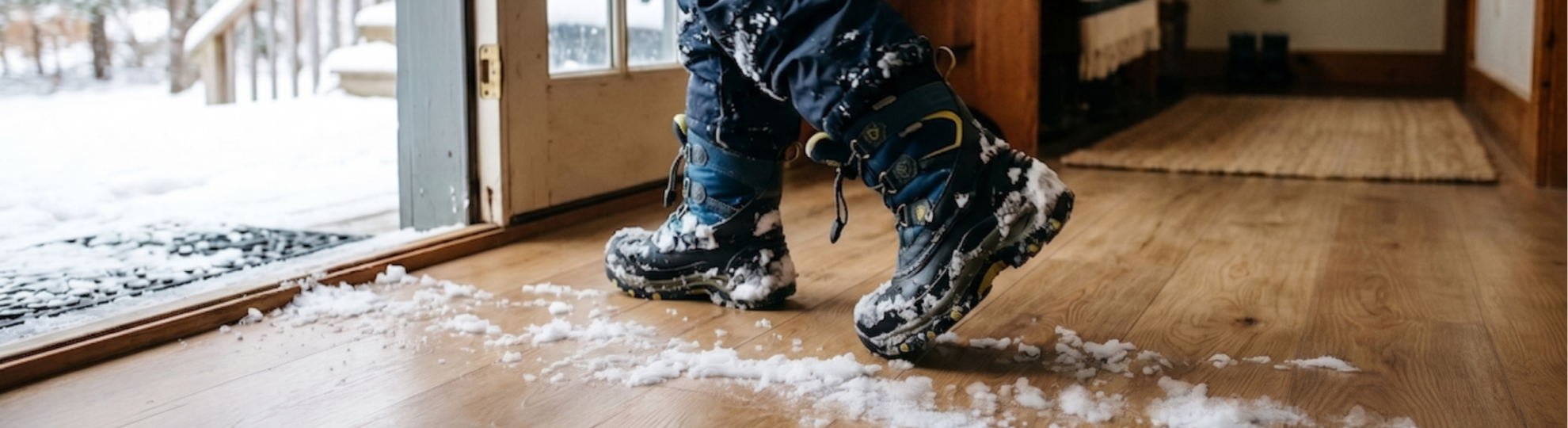
NZ winters put your floors to the test. Here’s what holds up, and what to avoid in the areas that take the most punishment.
Muddy boots at the front door. Wet school bags dropped in the hallway. Water tracked in from the ranch slider after another morning of NZ rain. If this sounds familiar, you already know what winter does to a busy home. Finding the best flooring for high-traffic wet areas NZ homes can handle is not as straightforward as it looks, and most flooring simply isn’t built for this level of daily punishment. The wrong choice buckles, stains, or becomes a slip hazard before winter is even halfway through. The good news is that there are flooring options specifically suited to these conditions, and the right choice isn’t always the most obvious one. This guide breaks down what works, what doesn’t, and which areas in your home need the most attention this winter.
Why Winter Is the Real Test for Your Floors
NZ winters bring a specific combination of challenges that summer simply doesn’t. Heavy rainfall, condensation building up along exterior walls, mud tracked in from the garden, and families spending significantly more time indoors, all of it lands on your floors.
The problem is that many flooring types perform well in dry conditions but show their weaknesses the moment moisture becomes a daily factor. Swelling boards, lifting edges, surface staining, and slip hazards are all symptoms of flooring that wasn’t built for winter conditions and they often appear faster than homeowners expect.
According to BRANZ research on moisture in NZ homes, moisture management is one of the most significant factors affecting the longevity and performance of interior building materials, flooring included.
For a floor to genuinely hold up through a NZ winter, it needs to meet three non-negotiables:
If you’re planning to install new timber or laminate flooring, there are a few important factors to keep in mind.
- Waterproof or moisture-resistant core – surface coatings aren’t enough. A hallway that sees six pairs of wet boots daily needs more than a water-resistant surface treatment; the core itself must be protected against moisture penetration.
- Wear layer durability – high-traffic zones need a surface rated for residential heavy use. Look for an AC4 rating as a minimum for areas like hallways, entryways, and kitchens.
- Easy maintenance – flooring that requires specialist cleaning products is the wrong choice for a busy winter household. Easy clean flooring NZ homeowners can manage with a damp mop and a quick wipe is the practical standard to aim for.
If your current flooring doesn’t tick all three boxes, winter will find that weakness.
The Highest-Risk Zones in a NZ Home This Winter

Not all areas of your home face the same level of risk. These are the zones that take the most punishment and where flooring choice matters most.
- Front entryway / front door This is ground zero. Every person who walks through your front door in winter brings rain, mud, and moisture in with them. It’s the highest-contact wet zone in any NZ home, and it needs flooring that can handle it without flinching.
- Hallways Hallways are constant through-traffic zones, and in winter, that traffic is almost always coming from outside. They’re often poorly ventilated, which means moisture lingers longer than it does in open-plan spaces. Wear and moisture exposure accumulate fast.
- Near ranch sliders and bifold doors This is one of the most overlooked problem areas in NZ homes. Condensation collects at the base of ranch sliders and bifold doors through winter, and water tracks in directly from decks and outdoor areas every time the door opens. Flooring near ranch sliders needs a genuinely moisture-resistant solution, not just a surface-level one.
- Kitchen Splashes, cooking steam, spills, and daily foot traffic combine to create a high-demand environment year-round but winter amplifies it. Families cooking and eating at home more often means more time on the kitchen floor, and more opportunity for moisture damage.
- Laundry transitions Frequently overlooked and chronically underestimated. The laundry is regularly wet underfoot from appliance use, wet clothing, and the constant cycle of washing through winter. The transition zone between laundry and adjoining rooms is particularly vulnerable and rarely gets the attention it deserves.
Why Winter Is the Real Test for Your Floors
NZ winters bring a specific combination of challenges that summer simply doesn’t. Heavy rainfall, condensation building up along exterior walls, mud tracked in from the garden, and families spending significantly more time indoors, all of it lands on your floors.
1. Hybrid Flooring
If you’re looking for the most moisture-proof option available, hybrid flooring NZ homeowners can rely on is the clear answer for truly wet, high-traffic zones.
Hybrid flooring is built around a 100% waterproof SPC (stone polymer composite) core, waterproof all the way through, not just at the surface. This is a meaningful distinction. Where water-resistant flooring protects against splashes, hybrid flooring protects against sustained moisture exposure at the core level. That matters in a NZ winter.
It’s also dimensionally stable. NZ’s temperature fluctuations through winter, warm days, cold nights, indoor heating, cause many flooring types to expand and contract. Hybrid flooring resists this movement, which means no gapping, no buckling, and no lifted edges.
Add a scratch-resistant wear layer (AC4 minimum) that handles daily heavy foot traffic without showing wear, a timber-look aesthetic that doesn’t sacrifice style for practicality, and a wipe-clean surface that needs no specialist products and you have the most complete solution available for wet, high-traffic conditions.
Best for: Entryways, hallways, kitchens, laundry transitions, and anywhere near ranch sliders or bifold doors.
2. Laminate Flooring
Laminate wood flooring is a high-performance, practical option for NZ homes and for many wet-zone applications, it’s a very strong choice.
It’s a multi-layer synthetic product with a photographic timber-look layer beneath a clear, hardwearing wear layer, bonded to a dense fibreboard core. The result is a surface engineered specifically for high-traffic modern spaces, built to take daily punishment without showing it. The authentic timber aesthetic comes without the maintenance demands of real wood, and the price point makes it accessible for whole-home applications.
For maintenance, it’s simple: sweep regularly and lightly damp-mop as needed. No specialist products required. That makes it a practical fit for busy households, especially in winter when floors are taking a beating every day.
Quality laminate flooring is water-resistant, not fully waterproof. It handles everyday splashes and tracked-in moisture well. Always pair laminate with a quality entrance mat at wet-zone thresholds, and look for an AC4 rating as a minimum for high-traffic residential use.
Best for: Hallways, kitchens, open-plan living, and high-traffic family spaces with moderate moisture exposure.
If laminate sounds like the right fit for your space, explore our laminate wood flooring range, including Quick-Step and Pergo, installed by JHF’s certified Master Installers.
3. Engineered Timber
Pre-finished engineered timber flooring brings the warmth and character of real wood underfoot with a construction designed to handle what NZ conditions throw at it far better than solid timber can.
Engineered timber is built with a genuine timber surface veneer bonded over multiple layers of cross-directional engineered core. That construction is the key. Where solid timber expands and contracts with changes in temperature and humidity (leading to cupping, warping, and gapping through a NZ winter) the engineered core resists that movement. It’s specifically designed to manage the expand/contract cycle that NZ’s humid winter conditions impose, and it does it meaningfully better than solid timber.
The factory pre-finish is another genuine advantage. The floor arrives on site already sealed for superior wear resistance and moisture protection, no on-site sanding, staining, or finishing required. That means faster installation and less disruption to your home during the process.
Honest limits: Engineered timber is moisture-resistant, not waterproof. It handles the humidity and moderate moisture exposure that comes with a NZ winter household well, but it’s not suited to areas where standing water or sustained wet underfoot conditions are a regular occurrence. This is best with proper transition matting.
Best for: Living rooms, bedrooms, dining areas, and hallways with moderate traffic and moisture exposure. A beautiful, durable choice for homeowners who want the real timber look without the fragility of solid wood.
Interested in exploring the range? View our pre-finished engineered timber flooring options or get in touch for a recommendation tailored to your space.
What to Look for When Choosing Flooring for Wet Areas
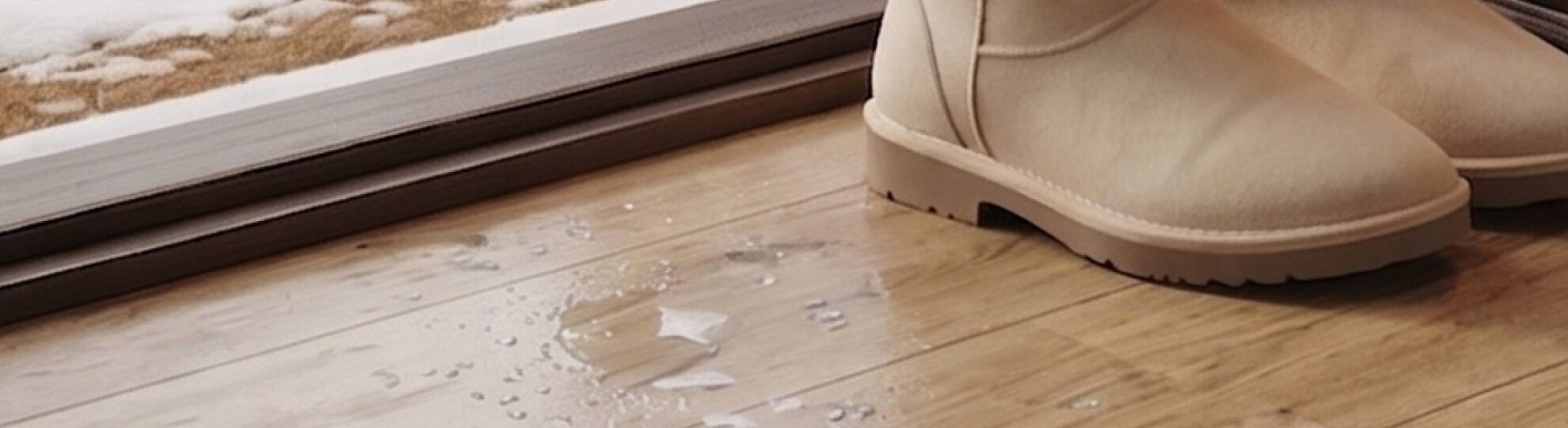
If you’re comparing options and feeling overwhelmed, these are the practical factors to filter by:
- AC Rating (Abrasion Class) The AC rating tells you how much wear a floor can take. For any high-traffic residential zone (hallway, kitchen, entryway) an AC4 rating is the minimum to look for. AC3 is suitable for lighter residential use only.
- Core Construction Surface-level water resistance isn’t enough for genuinely wet zones. Check what the core is made of. SPC (stone polymer composite) cores in hybrid flooring are fully waterproof through and through. HDF cores in laminate are water-resistant. Timber cores, whether engineered or solid, require careful moisture management.
- Installation Method Click-lock floating floors are the practical choice for most NZ homeowners. They can be installed over existing subfloors, they accommodate minor height differentials between rooms, and they don’t require glue — which means easier replacement of individual boards if damage does occur. Ensure the correct underlay is used for your subfloor type; the wrong underlay is one of the most common causes of premature floor failure.
- Warranty Coverage A meaningful warranty covers both the product and the installation. At JHF, every floor is installed by certified Master Installers, which means the installation itself is covered, not just the product. That matters when something goes wrong.
- Slip Resistance Rating Often overlooked but critical in wet zones. Look for a minimum P3 slip resistance rating for residential areas that regularly become wet underfoot. This is particularly important near ranch sliders, in kitchens, and at entryways.
The Bottom Line
NZ winters are hard on floors, especially in the areas that matter most. The right flooring choice comes down to three things: where it’s going, what it needs to handle, and how much maintenance you’re realistically willing to do.
For genuinely wet, high-traffic zones ( entryways, kitchens, laundry transitions, areas near ranch sliders) hybrid flooring is the most complete solution. For hallways and family living areas where moisture exposure is moderate, laminate is an excellent, practical choice. For living rooms and bedrooms where the real timber look matters and moisture isn’t a daily factor, engineered timber delivers beautifully.
Whatever you choose, it’s worth getting it right the first time. The cost of replacing a floor that wasn’t up to the task is always higher than the cost of choosing correctly from the start.
Not sure which floor is right for your space? Get in touch with the JHF team, we’ll give you a straight answer based on your home, your lifestyle, and your budget.
5 Quick Things to Know
- Not all flooring described as water-resistant is waterproof. The core construction matters more than the surface treatment, especially in genuinely wet zones.
- Hybrid flooring with an SPC core is the only fully waterproof option for areas with sustained moisture exposure, such as entryways, kitchens, and laundry transitions.
- Engineered timber handles NZ humidity and temperature changes well, but is not suited to areas where standing water is a regular occurrence.
- For hallways, kitchens, and entryways, look for an AC4 wear rating as a minimum. AC3 is rated for lighter residential use only.
- Areas near ranch sliders and bifold doors are among the most overlooked high-risk zones in a NZ home during winter.
Key Takeaways
- Hybrid flooring is the most suitable option for genuinely wet, high-traffic zones.
- Laminate is a practical, durable choice for hallways and family living areas with moderate moisture exposure.
- Engineered timber works well in living rooms, bedrooms, and dining areas where humidity is a factor but standing water is not.
- Always check the AC rating and core construction before choosing flooring for a high-traffic area.
- Entryways, hallways, and areas near ranch sliders are the highest-risk zones in a NZ home this winter.
Not sure which flooring is right for your home this winter?
The team at Just Hardwood Floors can assess your space and recommend the most suitable option based on the areas you need to cover.
Book a free consultation or get expert advice on your flooring today.